Collapsed Pipe Detection and Cleaning in Menifee, CA
No amount of cabling or jetting fixes a caved-in pipe wall — it only confirms one exists by refusing to pass through it. We locate the exact position and depth with sonde equipment, clear what's accessible, and hand you a precise scope for the repair that follows.
Locating What the Camera Can't Reach
A clog and a collapse produce identical symptoms from where you're standing — water backing up, a line refusing to drain — but they're fundamentally different problems. A clog is a blockage inside an otherwise intact pipe; the pipe itself is still round and structurally sound, and snaking or jetting restores flow. A collapse means the pipe wall has caved in, cracked through, or separated at a joint, physically closing the channel. No amount of cabling or jetting fixes that — it just confirms a collapse exists by refusing to pass through it, which is often the first real evidence anyone has that they're dealing with a structural failure rather than routine buildup.
The genuinely difficult part is locating exactly where the collapse sits once a camera can't travel through it. Drain Cleaning Menifee pushes the camera as far as it will physically go and marks that point as the near edge of the collapse. From there, a sonde transmitter built into the camera head sends a locatable signal to a surface receiver, letting us walk the exact path and depth of the pipe from above ground — pinpointing precisely where the obstruction sits even though the lens itself can't get past it. This service covers detection, precise location, and clearing whatever debris is accessible on the near side — not the structural repair itself. Once we've confirmed and mapped the collapse, we hand off a clear written scope for pipe bursting or pipe relining, the trenchless methods that actually rebuild the failed section, so that next step starts with an exact location and depth instead of an estimate and a contingency built in for uncertainty.
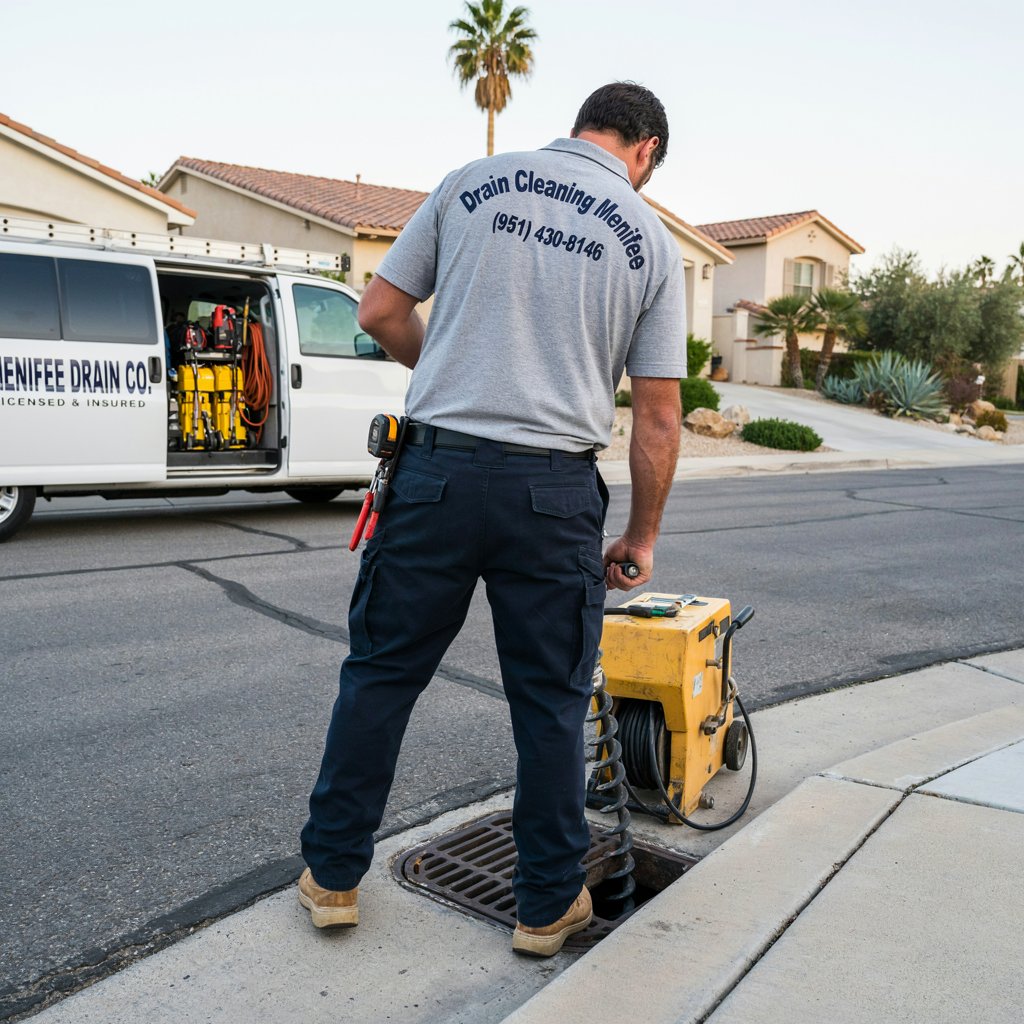
From First Camera Pass to a Written Scope
Push the Camera to Its Limit
We advance as far as physically possible and mark that point as the near edge of the suspected collapse.
Sonde Locating From the Surface
A transmitter in the camera head lets us walk the exact path and depth from above ground, well past where the lens itself can travel.
Mark the Precise Location and Depth
An exact surface marking, not an estimated area, so any repair crew opens the smallest possible dig site.
Clear Accessible Debris
Loose material on the near side of the collapse gets cleared to restore partial flow while repair is scheduled.
Provide a Written Findings Report
A clear scope handed off for pipe bursting or relining, so the repair quote starts from precise data, not a guess.
Detection and Clearing, Priced Separately
Detection and debris clearing are distinct line items, since not every job needs both — some just need the location confirmed for a repair contractor.
| Service | Typical Cost |
|---|---|
| Camera inspection and surface locating | $250 – $450 |
| Accessible debris clearing (if needed) | $150 – $350 |
A written findings report and repair recommendation are included at no extra charge, so you have a clear scope before requesting a repair quote.
Precursors Worth Investigating Before It's Total
Recurring Backups Despite Regular Cleaning
If the same fixture backs up repeatedly even with routine maintenance, a structural issue is worth ruling out.
A Cable Meeting Solid Resistance
Consistent resistance at the same point, rather than a blockage that eventually gives way, is a meaningful signal.
A Low Spot or Soft Patch in the Yard
Ground settling above a line's path can indicate a void forming beneath the surface.
Persistent Gurgling With No Clear Cause
Worth investigating alongside other symptoms rather than in isolation.
What Repair Contractors and Owners Say
Precision is what gets mentioned most — repair contractors specifically note that an exact location and depth let them open the smallest possible dig site. 4.9/5 across 86 verified reviews.
"Located the Collapse, Explained Our Options"
"Their camera team quickly located a collapsed line section and provided clear repair options."
"Accurate Diagnosis, No Guesswork"
"Accurate diagnosis saved us time and guesswork on our damaged sewer line."
"Clear Video Proof, Detailed Reporting"
"Clear video proof and detailed reporting on pipe damage. Highly reliable team."
Precision, Not an Estimated Area
Sonde Locating Equipment
Exact path and depth traced from the surface, past where a camera can physically travel.
Written Findings Report
A clear scope for repair contractors, included at no extra charge.
Accessible Debris Cleared
Partial flow restored where possible while repair is being scheduled.
Guaranteed Accuracy
We stand behind the precision of our detection and locating work.
Collapsed Pipe Detection FAQs
How is a collapsed pipe different from a regular clog?
A clog is a blockage inside an otherwise intact pipe — snaking or jetting restores flow because the pipe itself is still round and structurally sound. A collapse means the pipe wall has caved in, cracked through, or separated at a joint, physically reducing or closing the channel. No amount of cabling or jetting fixes a collapse; it only confirms one exists by refusing to pass through.
Do you repair the collapsed section yourselves?
This service covers detection, precise location, and clearing whatever debris is accessible — not the structural repair itself. Once we've confirmed and mapped the collapse, we hand off a clear written scope for pipe bursting or pipe relining, the trenchless methods used to actually rebuild the failed section, so you go into that next step with an exact location and depth instead of an estimate.
How much does collapsed pipe detection cost in Menifee?
Most Menifee detection visits run $250 to $450 for camera inspection and surface locating, with accessible debris clearing priced separately at $150 to $350 if needed. A written findings report and repair recommendation are included at no extra charge, so you have a clear scope before requesting a repair quote.
How do you detect a collapsed pipe if a camera can't get through it?
We push the camera as far as it will physically travel and mark that point as the near edge of the collapse. From there, a sonde transmitter built into the camera head sends a locatable signal to a surface receiver, letting us walk the exact path and depth of the pipe from above ground and pinpoint where the obstruction sits, even though the lens itself can't pass through it.
What causes a pipe to collapse?
The most common causes we find in Menifee are age-related deterioration in original clay or cast iron piping, root systems that have expanded joints past failure over years, ground shifting from nearby construction or soil settlement, and corrosion in older metal lines. Most collapses are the end point of a slow-developing problem rather than a sudden event.
Are there warning signs before a full collapse?
Usually, yes. Recurring backups at the same fixture despite regular cleaning, a cable meeting solid resistance at a consistent point, gurgling drains, or a low spot or soft patch developing in the yard above the line are all common precursors. Catching these signs before a full collapse gives you time to plan a repair instead of dealing with an emergency.
Why does the exact location and depth matter so much?
Repair contractors price and plan trenchless or excavation work off the exact dig site or access point, not a rough estimate. A precise location and depth reading means the repair crew opens the smallest possible area, avoids unnecessary damage to landscaping or hardscape, and can quote the job accurately instead of building in a large contingency for uncertainty.
Can you clear debris even if the pipe has collapsed?
We can clear loose debris and buildup on the accessible side of the collapse to restore partial flow and reduce the risk of a backup while repair is scheduled, but we can't clear material that's physically trapped beyond a caved-in or crushed section. That material stays in place until the structural repair opens the line back up.
How long does detection typically take?
Most residential and light commercial detection visits take 1 to 2 hours from camera run to surface locating and marking. Larger commercial properties or lines with multiple suspected trouble points can take longer, and we'll give you a time estimate once we understand the scope over the phone.
Is collapsed pipe detection covered by a guarantee?
Yes. We stand behind the accuracy of our location and depth findings — if a repair crew opens the ground at the marked point and the collapse isn't where we identified it, we'll return and re-locate it at no additional charge.
Get a Precise Answer, Not a Guess.
Contact us for camera and sonde-based detection — an exact location and depth, and a written scope ready for your repair contractor.
Drain Cleaning Services in Menifee
Residential
- ✓ Clogged Drain Clearing
- ✓ Drain Snaking
- ✓ Hydro Jetting
- ✓ Video Camera Drain Inspection
- ✓ Root Removal
- ✓ Sewer Line Cleaning
- ✓ Bathroom Drain Cleaning
- ✓ Kitchen Drain Cleaning
- ✓ Toilet Drain Cleaning
- ✓ Laundry Drain Cleaning
- ✓ Basement Drain Cleaning
- ✓ Roof Drain Cleaning
- ✓ Downspout Drain Cleaning
- ✓ Preventative Drain Maintenance
- ✓ Emergency Drain Cleaning
- ✓ Drain Odor Diagnosis and Removal
- ✓ Slow Drain Diagnosis and Repair
- ✓ Vent Stack Cleaning
- ✓ Water Leak Detection
- ✓ Floor Drain Cleaning
Commercial
Where We're Based
Based at 28692 Summer Ln in Menifee, CA. We locate collapsed and failing sewer lines at homes and commercial properties throughout Menifee and the surrounding Riverside County area.